Established setting
Compare mature-tree, resale, and condition variability honestly
A more established area may change how you think about lot character, park access, and renovation tolerance.
Explore →Use this page when the real decision is whether a more established setting or a newer-home pattern better matches your search.
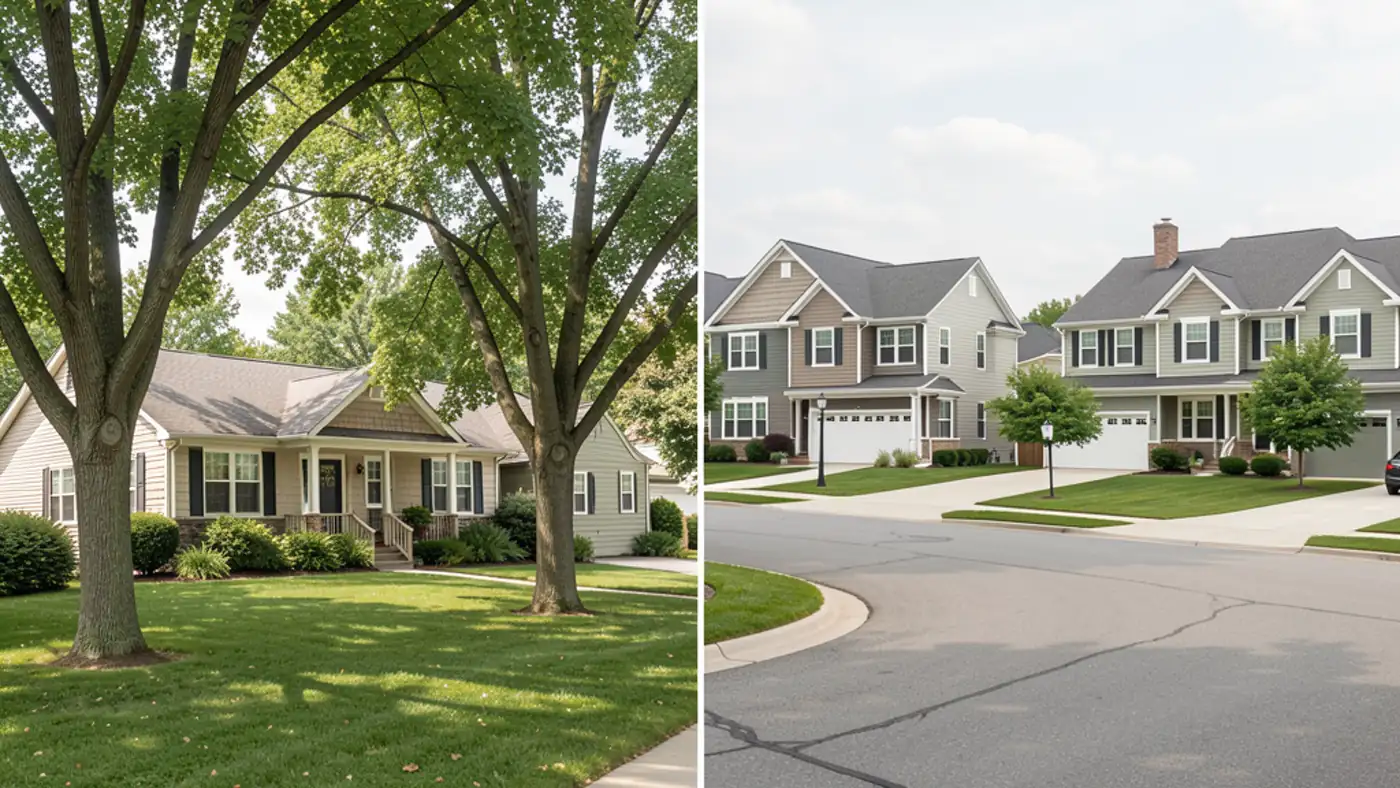
Some buyers want a more established setting with mature trees and resale variety. Others want a newer-home pattern, newer finishes, or a lower-maintenance feel. The useful comparison is not which side sounds better in abstract marketing language, but which tradeoffs match your actual tolerance.
Housing age, lot pattern, visible maintenance range, and the feel of the streetscape can all influence how a search unfolds. Those differences often shape both the shortlist and the questions you need to verify for a specific address.
When possible, compare street pattern, lot feel, traffic flow, visible upkeep, and nearby daily conveniences in both settings. Those details usually tell you more than a broad label like established or newer, especially once you start matching a home search to your actual routine.
Use the Walnut Creek Hills and Waterford Landing pages as representative comparison points, then verify the property-specific details that matter.
Established setting
A more established area may change how you think about lot character, park access, and renovation tolerance.
Explore →Newer-home pattern
A newer-home pattern can shift your expectations around finishes, upkeep, and how much of the area still feels like recent growth.
Explore →